

Like most men I think about Ancient Rome quite often. Both the empire and the republic. A particular part I wondered about often was Roman Egypt, a rather unique place where the elites from one ancient (to us) civilisation went and ruled another even more ancient (to them) civilisation.So, I wondered, could I understand a bit more about the normal life back then using papyri information to answer questions that have beguiled me for a while.
So the papyri of course show that they kept records in the ancient world. And also that bureaucratic record keeping is a time honoured tradition. Both are well known. But the two questions I cared about most were:
How did the entire bureaucracy even hang together, across such vast distances? What did the state even know about its people?
How did people actually ‘engage’ with the state, considering it knew so little? What did they ask of it?
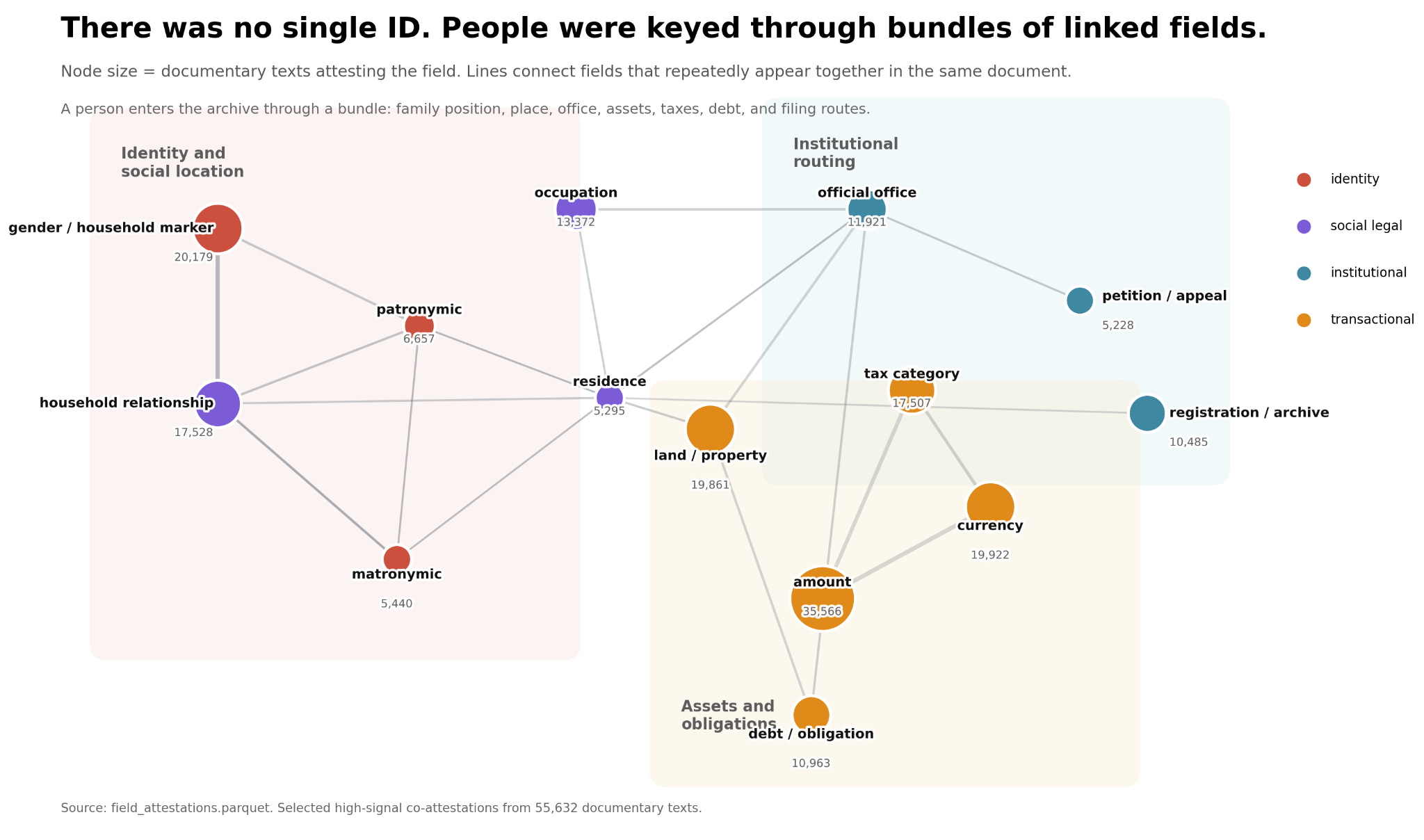
First, the data. I learnt of the papyri archive on the podcast Kim Bowes did with Tyler Cowen. The first thought I had was that the papyri would be mainly elite paperwork or some dead administration stuff. But the archive is not exactly that, but it is not a record of everyone either. It is a record of people who became legible when their lives the state bureaucratic apparatus for some reason.
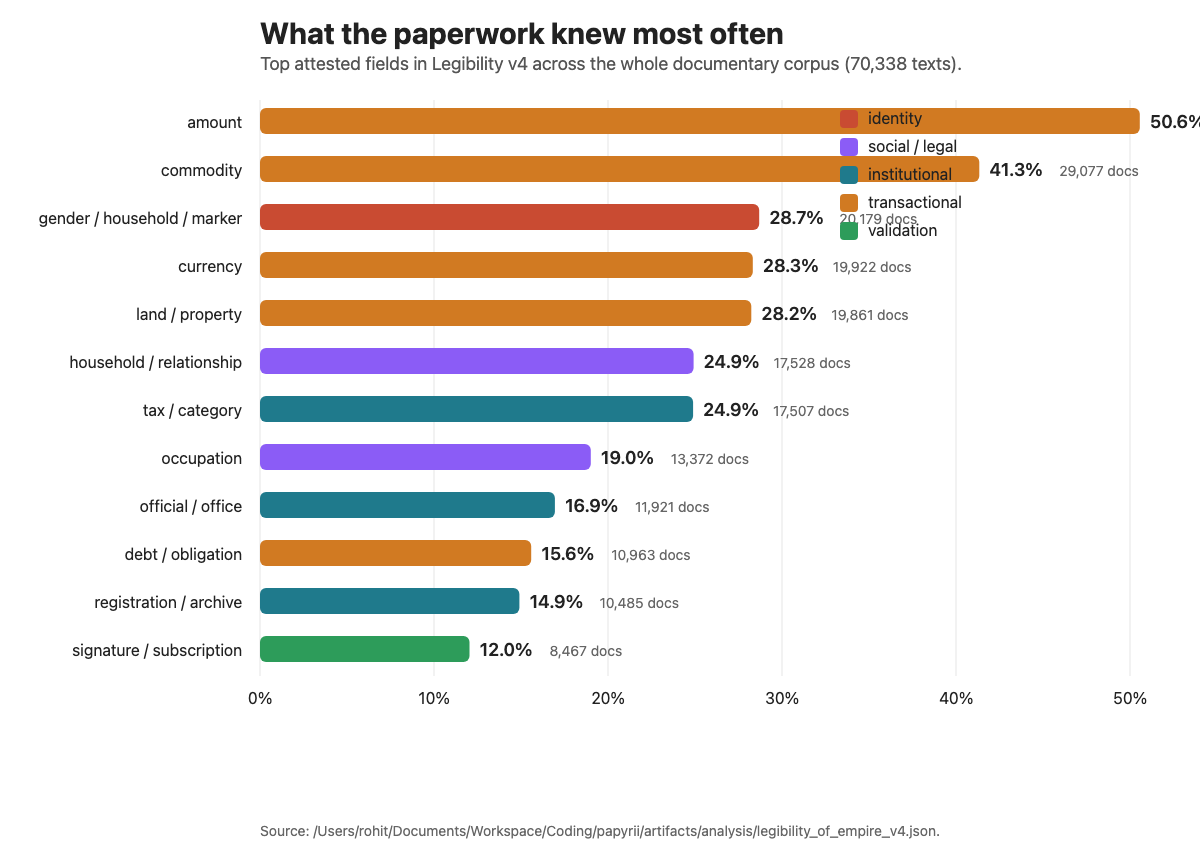
The way the paperwork was kept was more interesting. Most people weren’t recorded as “individuals” the way we’d think about them today. You have a SSN, you have a license, an ID, passport number. But there’s no database then, so what they had was clusters of people.
So the papyri showed people as bundles of relations and obligations. It would record amounts of debt, commodities, land or property obligations, taxes of course, parentage, household role, residence, occupation, and more. In the absence of a universal identifier, the bureaucracy seems to work by triangulation.
You are the sum total of your network. Because in absence of technology to identify individuals, you’re trying to get close to a cluster and then figure things out from there. The key question is pushed one level down, in other words.
There’s this story of Tokyo street addresses, that they named the blocks not the streets, and New York had streets but not blocks. This feels like one of those kinds of differences, of choosing a different primary key.
But the state knows stuff about you, to know your taxes or bushels of wheat. Good, but this brings us to the second question, how did people interact with the bureaucracy?
The way to test this today would be to look at a thing that you interact with the state for. Today we have things like passport applications or paying taxes. But in ancient Rome that probably wasn’t as widespread. But you know what is perennial? Complaining. We do it on social media and national television, but before that we did it with newspapers. Maybe we did that with papyri too.
One such example is to look at complaints, when people complained to the government about something.
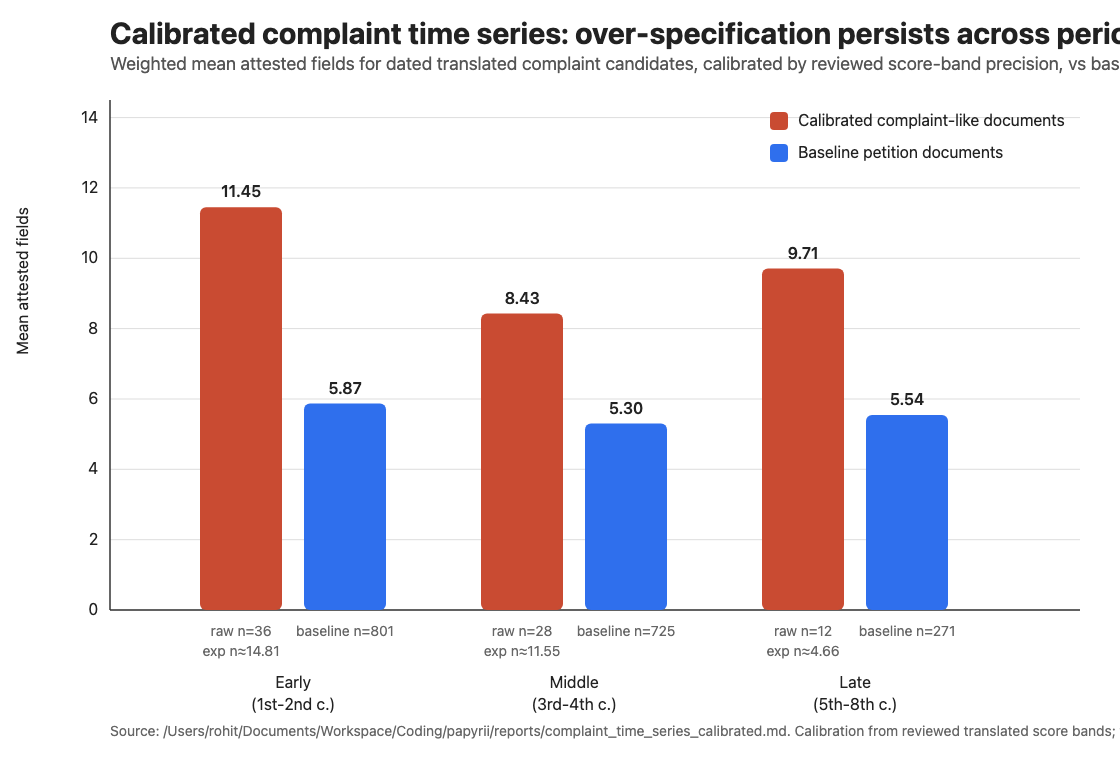
And turns out, in the periods where I could compare them, complaint-like documents carried about 2x as many attested fields as ordinary petitions from the same periods. Complaints are way more overspecified. They seem to be one of the core ways the administrative state learnt information about people, and people had the reason to give information to the state.
And we can see how the complaints were routed to the state so it could be read.
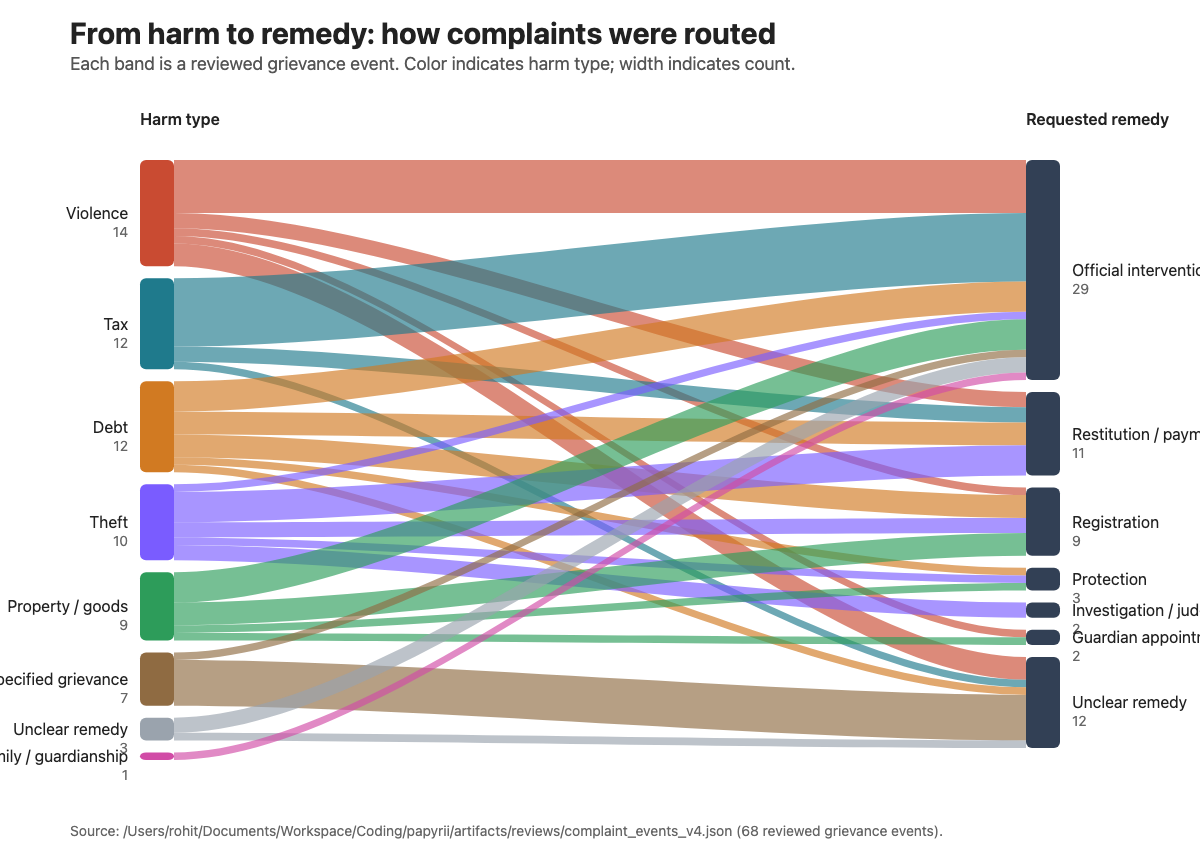
It’s interesting to see that such a large part of the records basically involved amounts or commodities, and the state’s role was mainly to play arbiter. To intervene or to help resolve or provide restitution. Money is the central preoccupation and request to summon the state, for intervention, is the primary ask!
Repository here: https://github.com/strangeloopcanon/papyrii